



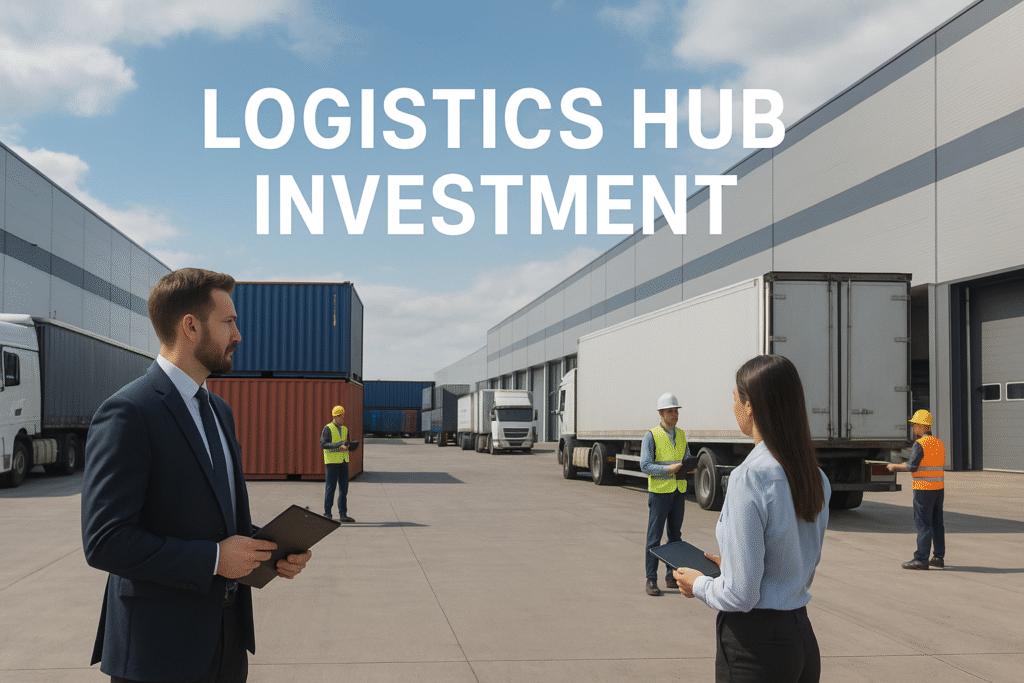
Logistics hub investment is increasingly becoming a cornerstone of modern trade and infrastructure planning. As supply chains grow more complex and global commerce expands, the demand for centralized hubs that manage goods, transport, and storage continues to rise. For investors, these hubs represent more than just warehouses and transport nodes; they are long-term, income-generating assets that drive both regional and international trade. Businesses and governments alike are prioritizing the creation of logistics zones to ensure efficiency, while investors find these assets appealing due to their potential for appreciation and stable yields. By understanding the importance of hubs, the flow of capital, and market trends, investors can make informed choices about this vital sector. Platform herlyx provides insights into structuring such investments with clarity and long-term vision.
Table of Contents
Why Focus on Logistics Hub Investment Today?
The world’s economic heartbeat relies on supply chains that move goods quickly and cost-effectively. Companies are no longer just looking at local warehouses but are shifting toward integrated hubs that connect road, rail, air, and sea transport. These hubs act as the core of the modern trade ecosystem. A carefully planned logistics hub investment gives investors exposure to markets where demand for warehousing and distribution capacity is accelerating. Unlike short-term real estate opportunities, hubs provide a more stable outlook due to their connection to trade flows. With the increasing role of e-commerce, multinational trade agreements, and infrastructure upgrades, such hubs are positioned as a resilient asset class. As highlighted on herlyx, structured investment strategies can help align returns with long-term business growth.
How Are Logistics Parks Driving Asset Growth?
Logistics parks and asset growth are closely tied to the rise of trade networks. Parks that host multiple warehouses, cross-docking facilities, and value-added services attract diverse tenants, from global retailers to third-party logistics providers. The advantage lies in scalability. A park can grow in phases, responding to demand while creating incremental income streams. Moreover, such parks tend to increase in value as trade corridors expand. For investors, asset growth is not just about rental income but also about the appreciation of the underlying land and facilities. According to herlyx, parks integrated with multimodal transport are particularly effective in creating sustainable growth for portfolios.
Why Stability Matters in Investment Planning
When evaluating hubs, investors are drawn to their ability to provide consistent income. Unlike office or retail properties, hubs are less susceptible to cyclical downturns because supply chains remain active even in uncertain markets. Businesses cannot pause their logistics needs, making occupancy rates relatively stable. A well-structured hub offers long-term leases with reliable tenants, often tied to industries like e-commerce or manufacturing. This creates dependable revenue streams. Furthermore, investors benefit from appreciation in prime locations, particularly those near ports and airports. As herlyx notes, strong planning and asset structuring play a crucial role in maximizing these returns and aligning with logistics parks and asset growth for long-term value.
Pro Tips
- Research Trade Corridors – Understand which regions are becoming dominant in trade flows before selecting a hub.
- Focus on Tenant Diversity – Avoid reliance on a single tenant; parks with multiple occupiers spread risk.
- Prioritize Multimodal Connectivity – Hubs with road, rail, sea, and air access are more resilient.
- Evaluate Lease Terms – Longer contracts with stable tenants add security to your portfolio.
- Plan for Scalability – Select hubs that can expand as demand rises for additional space.
- Consider Automation and Tech Adoption – Facilities with advanced tech ensure long-term competitiveness.
- Monitor Local Policies – Tax incentives and government infrastructure plans impact growth potential.
- Assess Land Appreciation – Beyond rental income, look at how the land’s value may rise over time.
- Review Environmental Compliance – Sustainable parks have stronger tenant appeal and reduced risks.
- Partner with Experts – Use platform herlyx to simplify asset structuring and maximize outcomes.
The Rising Impact of Logistics Parks and Asset Growth
The link between logistics parks and asset growth is evident when examining trade patterns across Asia, Europe, and the Americas. Parks are increasingly designed as ecosystems rather than just clusters of warehouses. They incorporate innovation, green energy, and real-time tracking systems. Such features attract multinational tenants that value efficiency and compliance with sustainability goals. For investors, this evolution drives long-term asset growth by ensuring demand for facilities remains high. By aligning with parks located near high-growth regions, investors can enjoy consistent appreciation and reliable income. According to herlyx, this alignment ensures portfolios remain both stable and future-ready.
FAQs
Q1: Why is logistics hub investment considered a stable choice?
A logistics hub investment provides stability due to consistent demand for warehousing and distribution. Supply chains continue regardless of market cycles, keeping occupancy levels high. Investors also benefit from long-term leases and the appreciation of land near trade corridors. Platform herlyx highlights how structured strategies can enhance these outcomes.
Q2: What factors should investors consider before selecting a logistics hub?
Investors should analyze location, tenant diversity, connectivity, and scalability. Parks near major ports or airports are often the most resilient. Government incentives and infrastructure policies also influence long-term performance.
Q3: How do logistics parks support industrial expansion?
They provide centralized hubs for multiple industries, allowing efficient distribution and reduced costs. As trade expands, these parks become essential for hosting e-commerce, retail, and manufacturing tenants, driving growth for investors.
Q4: What role does technology play in logistics investments?
Modern hubs rely on automation, data tracking, and digital systems to optimize performance. These technologies reduce downtime, attract tenants, and ensure long-term competitiveness in global trade markets.
Q5: Are logistics hubs only beneficial for large corporations?
No, mid-sized businesses and regional distributors also benefit. Hubs create opportunities for smaller companies to access efficient networks, while investors enjoy diversified tenant bases for steady revenue.
Conclusion
Logistics hub investment is emerging as one of the most reliable ways to participate in global trade expansion. The consistent demand for efficient distribution makes hubs a future-proof asset. At the same time, logistics parks and asset growth continue to drive appreciation, creating opportunities for both income and long-term value. Investors who focus on scalability, connectivity, and tenant diversity are best positioned for success. By leveraging structured insights from herlyx, portfolios can align with global trade shifts while securing sustainable returns. Ultimately, the growth of hubs represents both stability and innovation in the world of real estate and infrastructure investment.
